
Whether you’re making candles, soaps, bath bombs, body care products, reed diffusers, or room sprays, understanding IFRA standards is one of the most important aspects of working with fragrance oils.
While selecting the perfect fragrance may be the most enjoyable part of product development, ensuring that fragrance is used safely and appropriately is equally important. That’s where IFRA standards come in.
The International Fragrance Association (IFRA) establishes fragrance safety guidelines that help manufacturers, formulators, and hobbyists determine how much fragrance oil can safely be used in different product applications.
For many new makers, IFRA sheets can appear intimidating at first glance. However, once you understand how these documents are structured and how to apply the information they contain, they become one of the most valuable tools in your formulation process.
In this guide, we’ll explain what IFRA standards are, how to read an IFRA sheet, how fragrance categories work, and how to calculate safe fragrance usage rates for your products.
What Are IFRA Standards?
IFRA standards are safety guidelines developed by the International Fragrance Association to promote the safe use of fragrance ingredients in consumer products.
These standards are based on scientific research and toxicological evaluations performed by fragrance safety experts.
The goal of IFRA standards is to help reduce the risk of:
- Skin irritation
- Skin sensitization
- Allergic reactions
- Respiratory concerns
- Other adverse effects related to fragrance exposure
Rather than applying a single fragrance usage limit across all products, IFRA recognizes that different products present different exposure risks.
For example:
- A candle is not applied directly to the skin.
- A body lotion remains on the skin for extended periods.
- A soap is rinsed away after use.
Because consumer exposure differs significantly between these products, fragrance usage limits also vary.
What Is an IFRA Sheet?
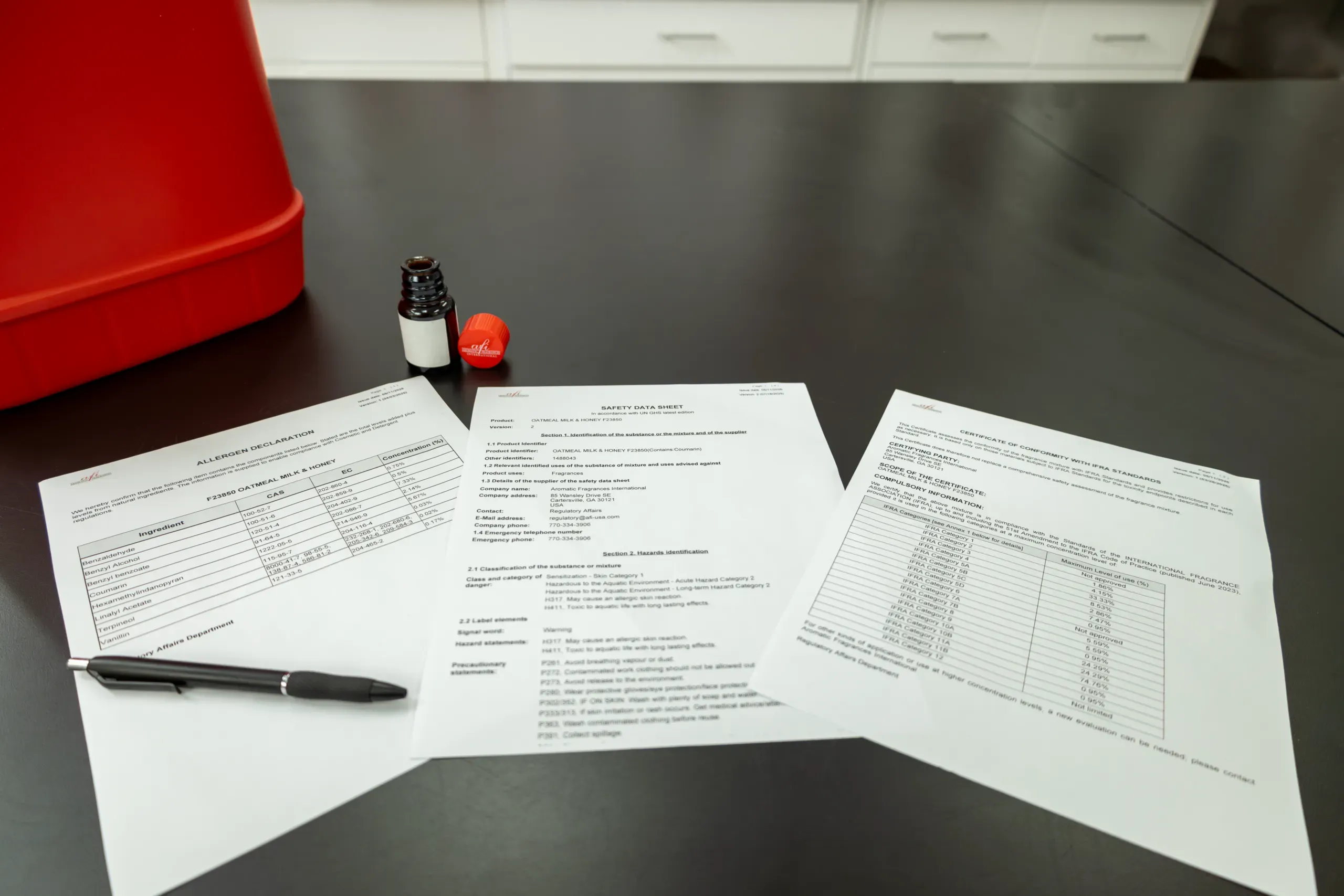
An IFRA sheet is a document provided by fragrance suppliers that outlines the maximum safe usage rates for a specific fragrance oil across various product categories.
Every fragrance oil should have its own IFRA certificate or IFRA compliance sheet.
These documents contain critical information that helps formulators determine how much fragrance can safely be incorporated into a finished product.
Information Typically Found on an IFRA Sheet
Most IFRA documents include:
- Fragrance name
- IFRA amendment version
- Product categories
- Maximum usage percentages
- Compliance statements
- Supporting regulatory information
While the formatting may vary between suppliers, the core information remains largely the same.
Why IFRA Standards Matter
Following IFRA standards helps protect both consumers and businesses.
Benefits include:
Improved Product Safety
IFRA guidelines are designed to minimize risks associated with fragrance exposure.
Regulatory Compliance
Many manufacturers use IFRA documentation as part of their broader compliance and quality assurance programs.
Professional Formulation Practices
Using IFRA standards demonstrates a commitment to product safety and industry best practices.
Consumer Confidence
Customers increasingly value brands that prioritize transparency and safety.
Understanding IFRA Product Categories
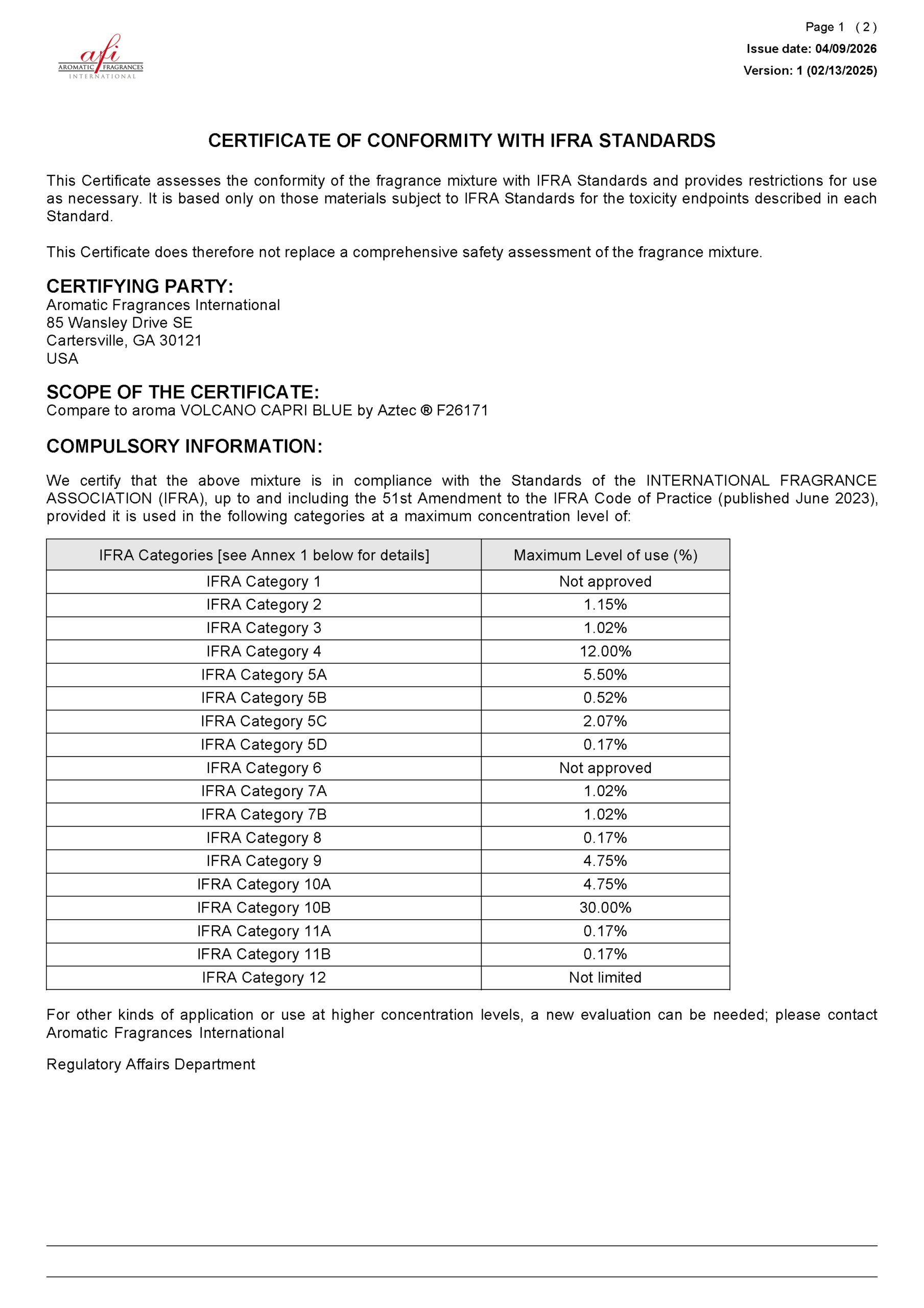
One of the most important sections of an IFRA sheet is the category table.
This table identifies the maximum fragrance usage rate for various product types.
Most IFRA sheets list categories in the left column and corresponding maximum usage percentages in the right column.
However, before you can determine the correct usage rate, you must identify which category your product belongs to.
Common IFRA Categories for Fragrance Products
The annex section, often found on the second page of an IFRA document, provides detailed category descriptions.
Some of the most commonly used categories include:
| IFRA Category | Product Type |
|---|---|
| Category 2 | Body Mists |
| Category 4 | Perfume and Body Oil |
| Category 5A | Body Lotion |
| Category 9 | Soap and Bath Bombs |
| Category 10A | Reed Diffusers |
| Category 10B | Air Freshener Sprays |
| Category 12 | Candles and Incense |
Understanding your product category is the first step toward proper fragrance usage.
How to Read an IFRA Sheet
Let’s walk through a practical example.
Imagine you’re formulating a bar soap.
You would first identify the appropriate IFRA category.
For soap products, that category is typically:
Category 9
Next, locate the maximum usage percentage associated with Category 9.
For this example, let’s assume the IFRA sheet lists:
Category 9 = 4.75%This means the fragrance oil should not exceed 4.75% of your total formulation weight.
This percentage represents the maximum safe concentration established for that particular fragrance in that specific application.
How to Calculate IFRA Usage Rates
Once you’ve identified the correct category and usage limit, calculating your fragrance allowance is straightforward.
Example Calculation
Let’s assume you’re making a soap recipe that contains:
- 32 ounces of oils
The IFRA limit is:
- 4.75%
Calculation
32 oz × 0.0475 = 1.52 ozThis means:
The maximum amount of fragrance oil you should use is 1.52 ounces.
This same calculation can be applied to:
- Body lotions
- Perfumes
- Room sprays
- Reed diffusers
- Bath bombs
- Other fragrance products
Simply multiply your formulation weight by the maximum IFRA percentage.
IFRA Standards vs. Product Performance
One of the most common misconceptions among formulators is assuming that the IFRA maximum usage rate is always the ideal usage rate.
This is not necessarily true.
Safe Does Not Always Mean Optimal
An IFRA sheet provides a safety limit—not a performance recommendation.
For example:
A fragrance may have an IFRA allowance of:
Category 12 = 100%This often occurs with products such as:
- Candles
- Incense
- Wax melts
Because these products generally do not come into direct skin contact.
However, using 100% fragrance in a candle would be impossible and undesirable.
Instead, candle makers must also consider:
- Wax compatibility
- Fragrance load limits
- Burn performance
- Wicking performance
- Frosting
- Oil seepage
- Candle sweating
The IFRA limit establishes safety boundaries, while your formulation determines optimal performance.
Why Candle Makers Need IFRA Standards
Although candles typically allow higher fragrance usage levels than body care products, IFRA documentation remains important.
Benefits include:
- Product documentation
- Compliance records
- Customer transparency
- Product development guidance
Professional candle makers often maintain IFRA documentation for every fragrance used in their product line.
Why Soap and Body Care Makers Need IFRA Standards
For products that contact the skin, IFRA standards become even more important.
Products commonly affected include:
- Soap
- Lotion
- Body butter
- Bath bombs
- Perfume
- Body oil
- Body mist
Exceeding IFRA recommendations can increase the risk of irritation or sensitization.
Using the proper fragrance concentration helps ensure both safety and customer satisfaction.
Common Mistakes When Reading IFRA Sheets
Many beginners encounter similar challenges when working with IFRA documents.
Using the Wrong Category
Always verify the correct product category before calculating usage rates.
Assuming All Fragrances Have the Same Limits
Every fragrance oil is different.
A vanilla fragrance and a citrus fragrance may have dramatically different IFRA limits.
Ignoring Formula Performance
Safety limits do not replace formulation testing.
Using Outdated Documents
Always work from the most recent IFRA certificate provided by your supplier.
Building Safer Products with IFRA Standards
Successful product formulation requires balancing creativity, performance, and safety.
By understanding IFRA standards and regularly consulting IFRA sheets during product development, you can:
- Formulate more confidently
- Improve product consistency
- Enhance consumer safety
- Support regulatory compliance
- Build customer trust
Whether you’re creating candles, soaps, perfumes, lotions, or home fragrance products, IFRA documentation should be an essential part of your formulation toolkit.
Access IFRA-Compliant Fragrance Oils from Aromatic Fragrances International
At Aromatic Fragrances International, we understand how important fragrance safety and compliance are for makers and manufacturers. That’s why we provide comprehensive documentation for our fragrance oils, including IFRA certificates, Safety Data Sheets (SDS), and other technical resources to support your formulation process.
Whether you’re creating candles, soaps, body care products, room sprays, reed diffusers, or custom fragrance applications, our team is committed to helping you develop products that are both high-performing and safe.
Visit our Fragrance Library to discover our fragrance oils, or contact our team through our Contact Page if you have questions about fragrance usage rates, compliance documentation, or product development.
Frequently Asked Questions
What are IFRA standards?
IFRA standards are fragrance safety guidelines established by the International Fragrance Association to help ensure fragrance ingredients are used safely in consumer products.
What is an IFRA sheet?
An IFRA sheet is a document that lists the maximum safe usage levels of a fragrance oil across various product categories.
Why are IFRA standards important?
IFRA standards help reduce the risk of skin irritation, sensitization, and other adverse reactions while supporting safe product formulation.
How do I calculate fragrance usage from an IFRA sheet?
Multiply your total formulation weight by the maximum IFRA percentage listed for your product category.
What IFRA category is used for soap?
Soap products typically fall under Category 9, although formulators should always verify category classifications using the supplier’s documentation.
Are IFRA limits the recommended fragrance load?
No. IFRA limits represent maximum safety thresholds, not necessarily optimal performance levels.
Do candles have IFRA limits?
Yes. Candles generally fall under Category 12, although fragrance limits vary depending on the specific fragrance oil.
Do all fragrance oils have the same IFRA limits?
No. Every fragrance oil has unique safety limits based on its composition and the ingredients it contains.