
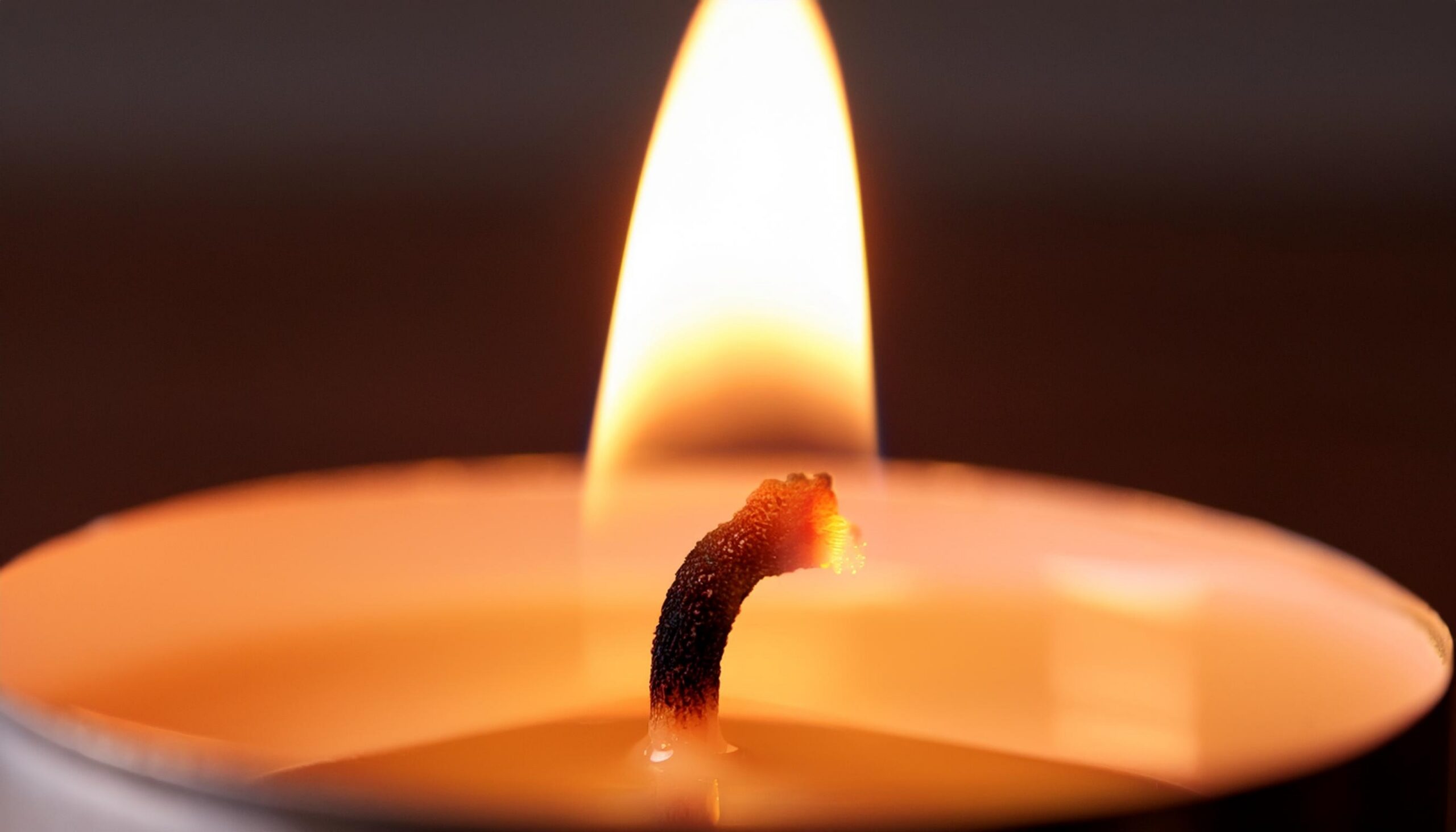
Candlemaking continues to be one of the most popular segments of the home fragrance industry. From hobbyists selling at local markets to established brands shipping nationwide, candles remain a consumer favorite thanks to their ability to provide both ambiance and fragrance.
However, with that popularity comes responsibility.
As a candle maker, product safety should always be a top priority. While properly manufactured candles are generally safe when used as intended, consumers may not always follow safe burning practices. This is why candle safety labels play such an important role in protecting both customers and businesses.
Safety labels provide important instructions that help reduce the risk of accidents, property damage, and injuries caused by improper candle use. They also demonstrate professionalism and help communicate that your business takes consumer safety seriously.
In this guide, we’ll cover what candle safety labels are, what information they should include, where they should be placed, and why every candle maker should consider using them.
Why Candle Safety Labels Matter
Candles contain an open flame, making them inherently different from many other home fragrance products.
While millions of candles are burned safely every year, candle-related accidents still occur due to improper use, including:
- Leaving candles unattended
- Burning candles near flammable materials
- Failing to trim wicks
- Burning candles for excessive periods
- Allowing debris to accumulate in the wax pool
- Placing candles within reach of children or pets
Many consumers may not be familiar with proper candle care and burning practices.
As candle makers, it is important not to assume that every customer understands how to use candles safely.
This is where candle safety labels become an essential part of your product packaging.
In addition to obtaining proper business insurance and conducting thorough burn testing, safety labels help educate consumers and reduce potential risks.
Are Candle Safety Labels Required?
The answer depends on where your products are being sold.
Candle Label Requirements in the UK and EU
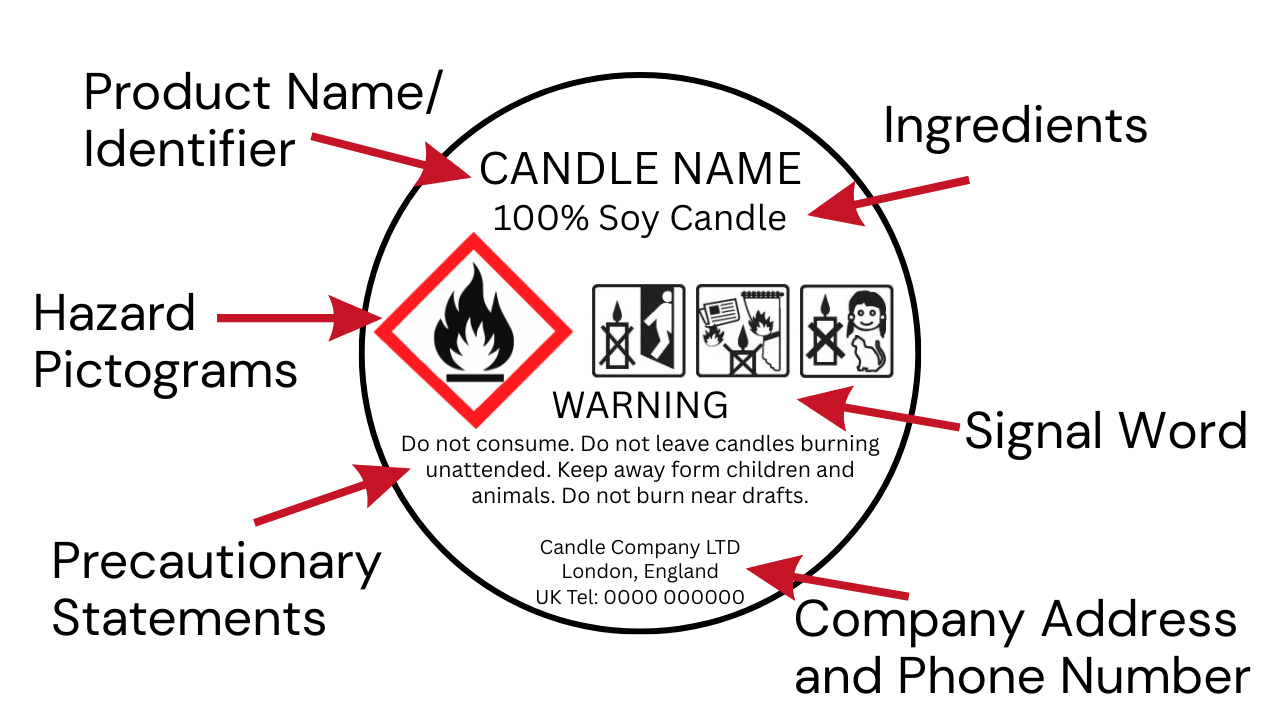
In the United Kingdom and European Union, candles typically require CLP (Classification, Labelling and Packaging) compliance when fragrance ingredients trigger applicable regulations.
CLP labels may include:
- Product identification
- Supplier information
- Company address
- Contact details
- Hazard statements
- Precautionary statements
- Hazard pictograms
Requirements vary depending on the fragrance composition and applicable regulations.
Candle Label Requirements in the United States
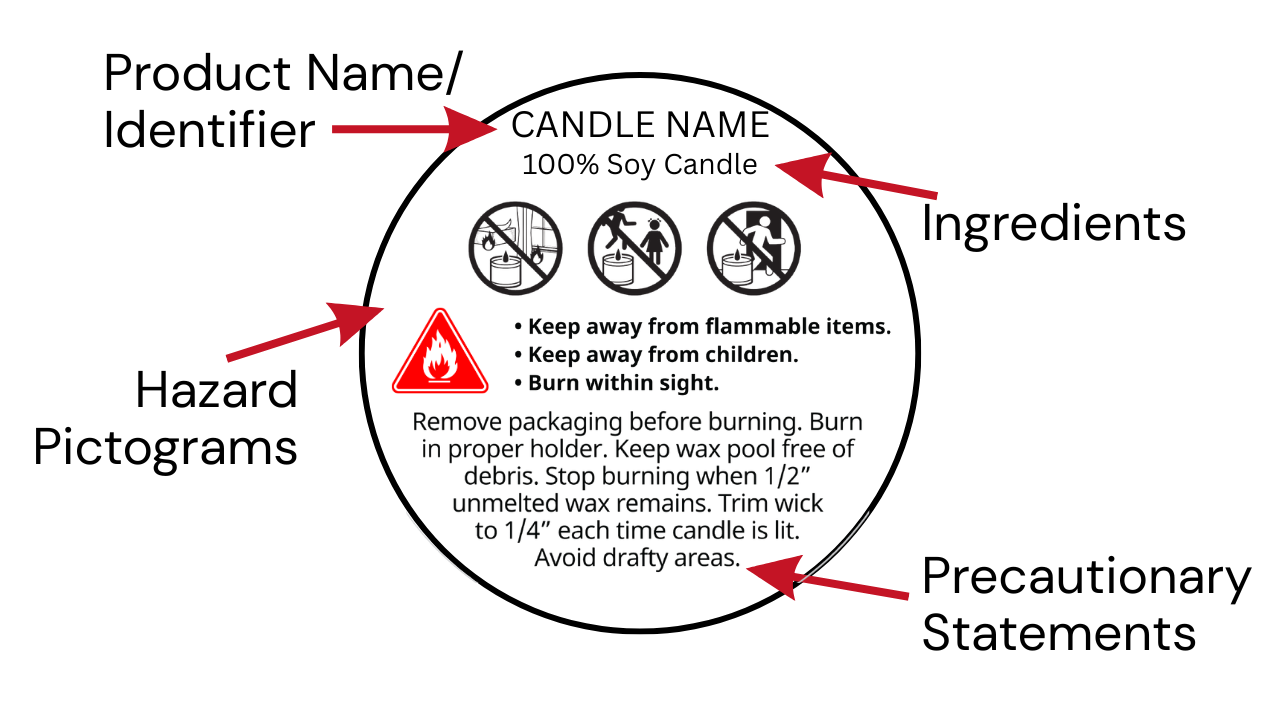
In the United States, candle safety labels are generally not mandated by federal law for most handmade candle businesses.
However, industry best practices strongly encourage their use.
Even when not legally required, safety labels demonstrate professionalism and help communicate important burning instructions to customers.
Many insurance providers and retailers also expect candle makers to follow recognized safety standards and labeling practices.
What Should a Candle Safety Label Include?
At a minimum, every candle safety label should provide clear instructions for safe candle use.
The goal is to reduce common mistakes that can lead to accidents.
Basic Candle Safety Instructions
Most candle safety labels should include warnings such as:
- Burn within sight
- Keep away from flammable materials
- Keep away from children and pets
- Keep wick trimmed to 1/4 inch
- Keep debris out of the wax pool
- Burn on a heat-resistant surface
- Do not move while burning
- Discontinue use when a small amount of wax remains
These simple instructions can significantly improve safe candle usage.
Recommended Candle Warning Statements
Many candle makers include specific warning statements on their labels.
Common examples include:
Fire Safety Warnings
- Never leave a burning candle unattended
- Keep away from combustible materials
- Burn within sight at all times
Child and Pet Safety Warnings
- Keep out of reach of children
- Keep out of reach of pets
Proper Burning Instructions
- Trim wick to 1/4 inch before each burn
- Remove wick trimmings and debris
- Place candle on a stable surface
- Avoid drafts and vents
End-of-Life Instructions
- Stop burning when 1/2 inch of wax remains
- Discontinue use before the container overheats
These warnings help reduce the likelihood of misuse.
Burn Time Recommendations
One important piece of information that is often overlooked is burn duration.
Candles should not be burned indefinitely.
Recommended burn times vary based on:
- Vessel size
- Wax type
- Wick size
- Candle diameter
- Fragrance load
Your recommended burn time should be determined through proper burn testing.
Many candle makers include instructions such as:
- Do not burn longer than four hours at a time
- Allow candle to cool before relighting
Because every candle design is unique, your burn testing results should guide these recommendations.
Additional Information You May Include
While not always required, many candle makers choose to include additional product information.
Wax Type
Examples include:
- 100% Soy Wax
- Beeswax
- Coconut Wax
- Paraffin Wax
- Parasoy Blend
- Coconut Soy Blend
Ingredient Information
Some businesses choose to disclose:
- Wax type
- Fragrance ingredients
- Dye information
- Additives
Product Identification
Including product details can improve professionalism and traceability.
Examples include:
- Candle name
- Collection name
- Batch number
- Production date
Essential Elements of a Professional Candle Label
When designing candle labels, consider including:
Product Information
- Candle name
- Brand name
- Net weight
- Wax classification
Safety Information
- Candle warning statements
- Burn instructions
- Wick trimming instructions
- Burn-time recommendations
Compliance Information
- Hazard pictograms (where applicable)
- CLP information (if required)
- Company contact information
Providing complete information helps build trust with customers while supporting safe product use.
Where Can You Get Candle Safety Labels?
Fortunately, candle safety labels are easy to obtain and affordable for businesses of any size.
Premade Safety Labels
Many candle supply companies offer:
- Preprinted warning labels
- Standard safety labels
- Bulk label options
These labels are often inexpensive and ready to use immediately.
Editable Templates
Popular design platforms offer customizable templates.
Examples include:
- Canva
- Adobe Photoshop
- Adobe Illustrator
Templates allow businesses to incorporate their branding while maintaining safety messaging.
Custom-Designed Labels
Some candle makers prefer creating labels entirely from scratch.
Custom labels allow for:
- Brand consistency
- Unique designs
- Product-specific instructions
If creating custom labels, ensure all necessary safety information remains clearly visible and easy to read.
Where Should Candle Safety Labels Be Placed?
Label placement is just as important as label content.
Bottom Label Placement
The most common placement location is the bottom of the candle container.
Benefits include:
- Easy visibility
- Permanent attachment to the product
- Reduced likelihood of disposal with packaging
Most consumers naturally inspect the bottom of a candle before use.
Packaging Inserts
Many candle makers also include:
- Safety cards
- Instruction pamphlets
- Warning inserts
This allows customers to review safety information immediately after opening the product.
Multiple Reminder Locations
Some brands include abbreviated safety reminders on:
- Dust covers
- Lid stickers
- Product packaging
Multiple reminders can reinforce safe candle use.
Common Candle Labeling Mistakes
Even experienced candle makers occasionally overlook important safety details.
Missing Burn Instructions
Customers should always know how to safely burn the candle.
Small or Difficult-to-Read Text
Safety information should be easy to locate and understand.
Failing to Conduct Burn Testing
Safety recommendations should be based on actual testing.
Omitting Contact Information
Providing company information helps customers contact you with questions or concerns.
How Candle Safety Labels Protect Your Business
Candle safety labels are not only beneficial for consumers—they also help protect your business.
Proper labeling can:
- Demonstrate due diligence
- Reduce customer confusion
- Support insurance requirements
- Improve professionalism
- Reinforce safe product usage
While labels cannot eliminate every risk, they form an important part of a comprehensive product safety program.
Combined with proper formulation, thorough testing, quality control, and business insurance, candle safety labels help create a safer experience for everyone involved.
Prioritize Safety in Every Candle You Make
Creating beautiful, fragrant candles is only part of running a successful candle business. Equally important is ensuring customers understand how to use those candles safely.
Well-designed candle safety labels provide clear instructions, reinforce responsible burning practices, and help protect both consumers and businesses. Whether you’re selling at craft fairs, through an online store, or in retail locations, proper labeling should be considered an essential part of every candle you produce.
At Aromatic Fragrances International, we’re committed to helping candle makers succeed through premium fragrance oils, educational resources, and industry expertise. Browse all our Fragrance Oils to find the perfect scents for your candles, or contact our team through our Contact Page if you need assistance selecting candle-safe fragrance oils for your next product line.
Frequently Asked Questions
Are candle safety labels required?
Requirements vary by country. In the United States, safety labels are generally recommended as an industry best practice, while certain products sold in the UK and EU may require CLP labeling.
What should a candle warning label say?
Most candle warning labels include instructions to burn within sight, keep away from flammable materials, keep away from children and pets, trim the wick, and discontinue use when a small amount of wax remains.
Where should candle safety labels be placed?
Most candle makers place safety labels on the bottom of the candle container. Additional safety information may also be included inside the packaging.
What is a CLP label?
CLP stands for Classification, Labelling and Packaging. It is a regulatory framework used in the UK and EU that may require hazard information on certain fragranced products.
Should handmade candles have warning labels?
Yes. Even when not legally required, warning labels are considered a best practice and help communicate important safety information to consumers.
How often should candle burn testing be performed?
Burn testing should be conducted whenever changes are made to the candle formulation, wick, fragrance, wax, vessel, or manufacturing process.
Can candle labels include ingredient information?
Yes. Many candle makers voluntarily include information about wax types, fragrances, and other ingredients to improve transparency.
Do candle safety labels replace business insurance?
No. Safety labels are one component of risk management, but candle businesses should also consider obtaining appropriate product liability insurance.